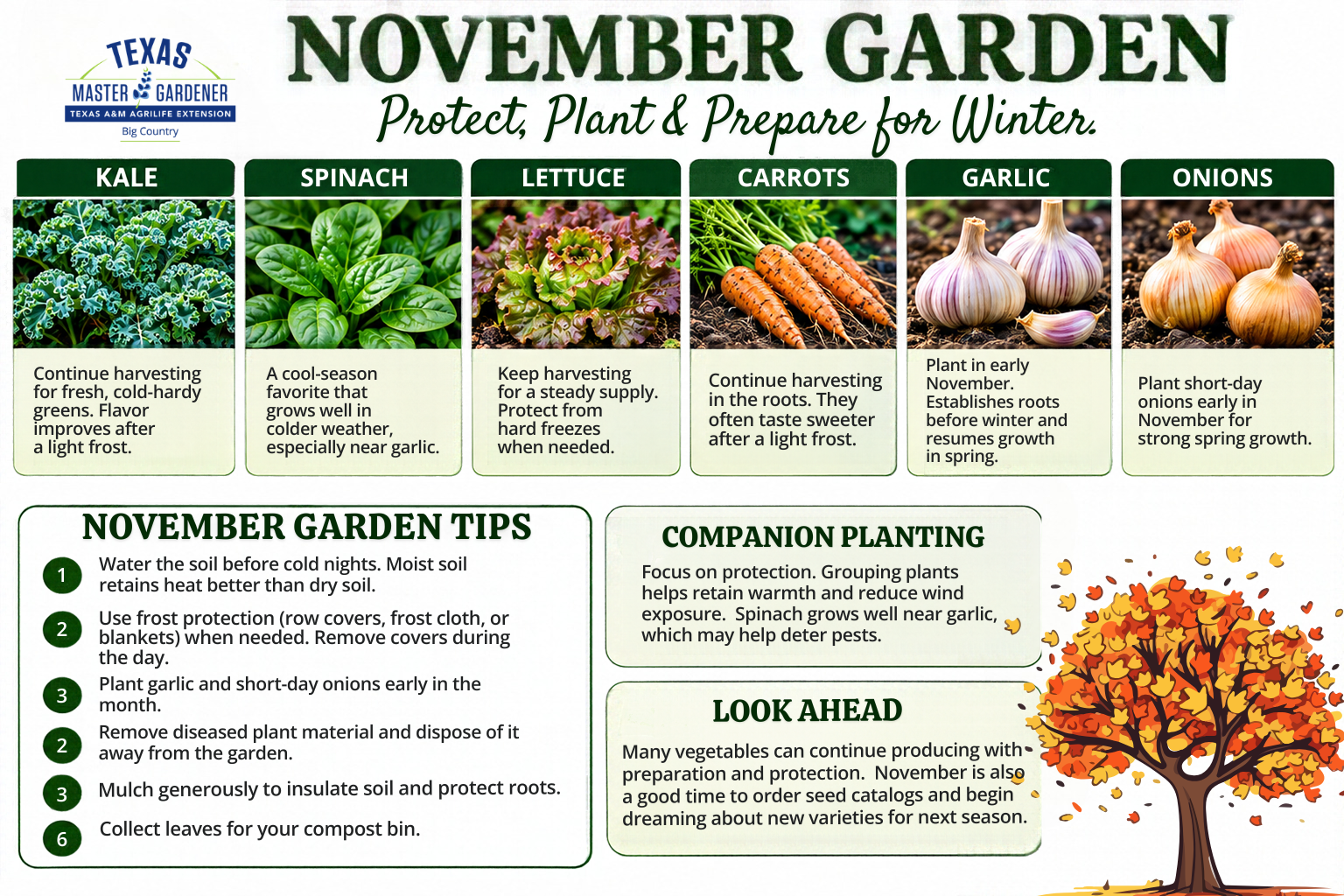
November marks the transition toward winter in the Abilene vegetable garden. Many fall crops remain productive, but the risk of frost increases and requires closer attention.
Continue harvesting cool-season vegetables such as kale, spinach, carrots, and lettuce. Many greens become sweeter after a light frost. Water the soil before cold nights because moist soil retains heat better than dry soil.
Use frost protection when needed. Row covers, frost cloth, or even old blankets can protect crops on cold nights. Remove covers during the day to prevent overheating.
If you have not already done so, plant garlic and short-day onions early in November. These crops establish roots before winter and resume growth in spring. Mulch these beds to retain moisture and reduce weeds.
In November, companion planting focuses on protection. Grouping plants helps retain warmth, while dense planting reduces wind exposure and soil temperature swings. Spinach grows well near garlic, which may help deter pests.
Remove diseased plant material promptly and dispose of it away from the garden. Clean beds reduce overwintering pests and diseases. Apply mulch generously to insulate soil and protect roots. This is also a good month to collect leaves for a compost bin, giving you your own supply by spring.
With preparation and protection, many vegetables can continue producing into winter. November is also a good time to order seed catalogs and begin dreaming about new varieties for next season.