
By Grace Broyles
No, plumerias do not have plumes, nor do they look plumish, but they there’s a good reason they’re called “Plumeria.” The tree, yes, a tree — is named after a man named Charles Plumier, a French royal botanist and a Catholic monk, who lived from 1646 to 1704. Plumier traveled a lot and spent a considerable amount of time in the tropical Americas where he meticulously documented all the plants he came across that had not been previously identified. He also made detailed drawings of them. In 1753, Carl Linnaeus, the great Swedish botanist, named a genus after Plumier, because of his contribution to botany, something not normally done .
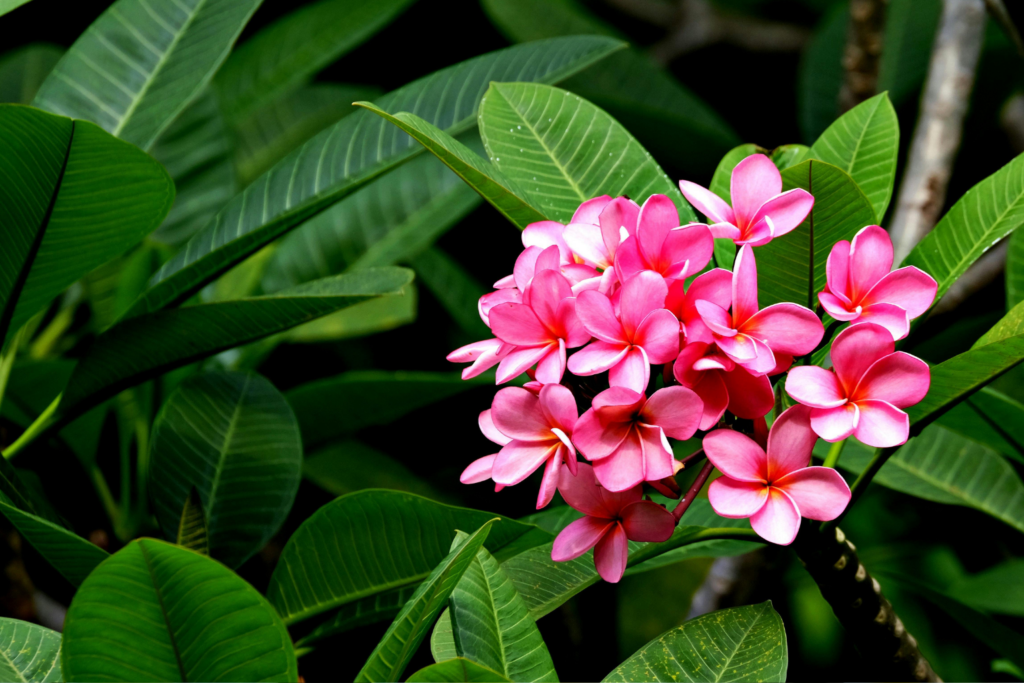
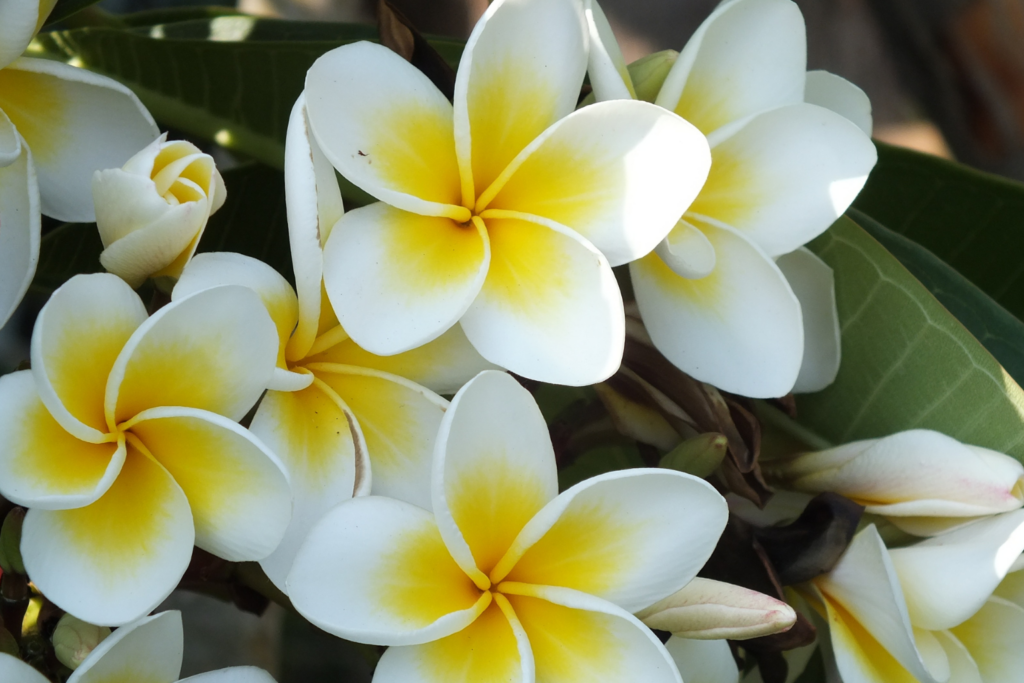
Plumerias are also called “Frangipani.” This name comes from the perfume scent that a well-known perfumer in London had synthetically produced, to promote perfume. (And that’s another interesting story.) But the name “Frangipani” does suit the plant, because the waxy-looking Plumeria flowers have a very strong sweet scent. One might recognize the flowers of the plant as they are used in Hawaiian leis.
This plant is in the dogbane family of plants, which produce a milky sap substance when cut or damaged that may irritate sensitive skin. The family also includes periwinkles and oleanders.
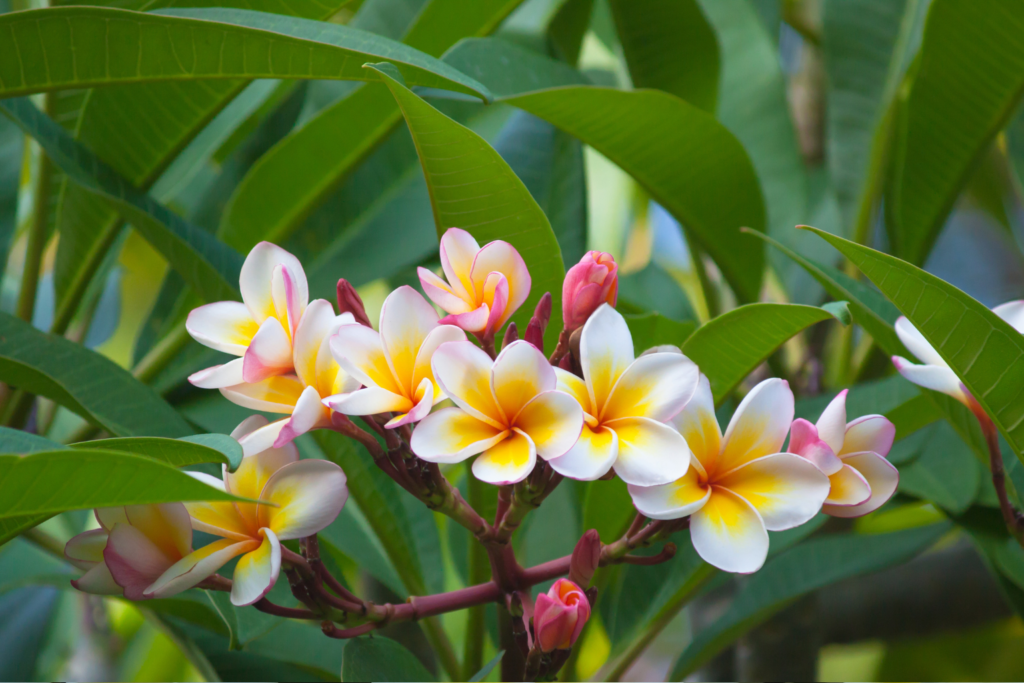
Plumerias are native to Central America and into South America down to Brazil and Venzuela, the Pacific islands, and southern Florida. But we can grow Plumerias here in West Central Texas. The best place to do so is in a pot so the plant can be moved in for the winter, where the temperatures stay above 40 degrees, as they do not survive very cold or freezing temperatures.
In their natural habitat, Plumerias will grow 20-30 feet tall with thick multi trunks, and up to 25 feet wide. In pots here in Texas, they will not do so. They will tend to stop growing at about 5 – 8 feet tall. These small trees look a little like cactus, with their thick stems–the ends on which leaves and flowers are produced.
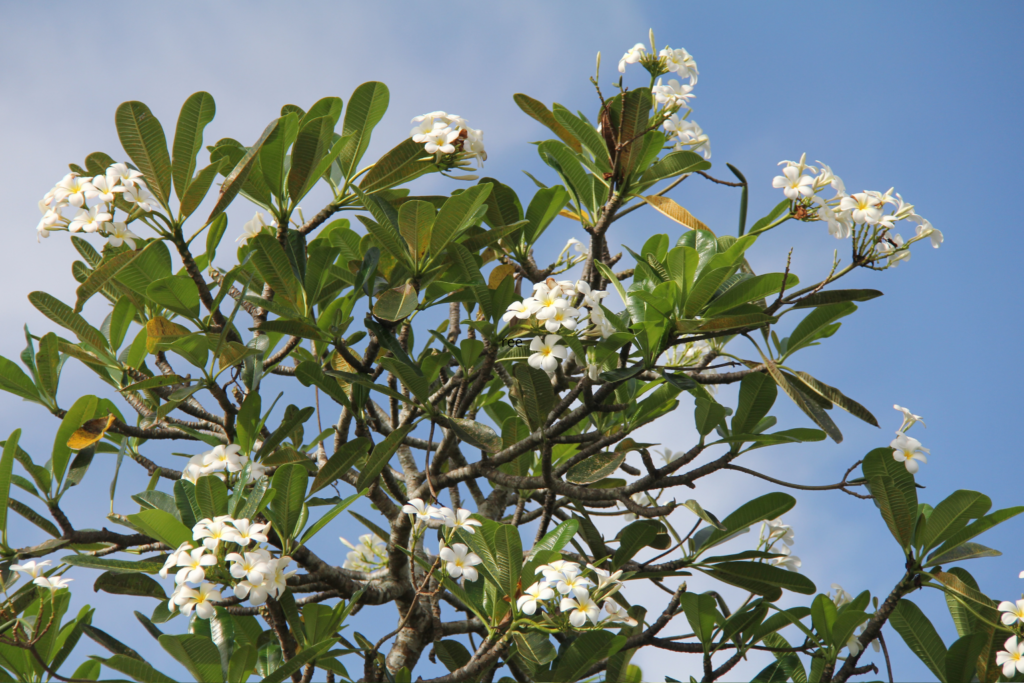
Plumerias thrive in full sun to partial shade, need good soil drainage, and can be ignored for several weeks at a time without watering. They do best with a weekly watering of about an inch, including rain, and a little fertilizer about once a month during the growing season. Too much nitrogen will encourage more leaf production, and fewer flowers. Phosphorus will encourage flower production.
Plumeria flowers come in colors from white to red and even yellow. Some Plumerias tend to have flowers that lighten or darken as the season progresses. The flowers will emerge midsummer, from about July, and last through November, or when the temperatures drop too low.
To start a Plumeria tree, one only needs to find a friend who has one, ask for a branch segment, which sometimes get knocked off, stick it in some well-draining soil in a pot, water it well, and leave it be. The soil must not be let to dry out completely. It does take time for the segment to develop roots, and then grow into a tree as they are quite slow growing.
The other option is to purchase one from a nursery or online.
The popular variety is the Plumeria rubra, which is the most fragrant one, and comes in a variety of colors. But there are several varieties.
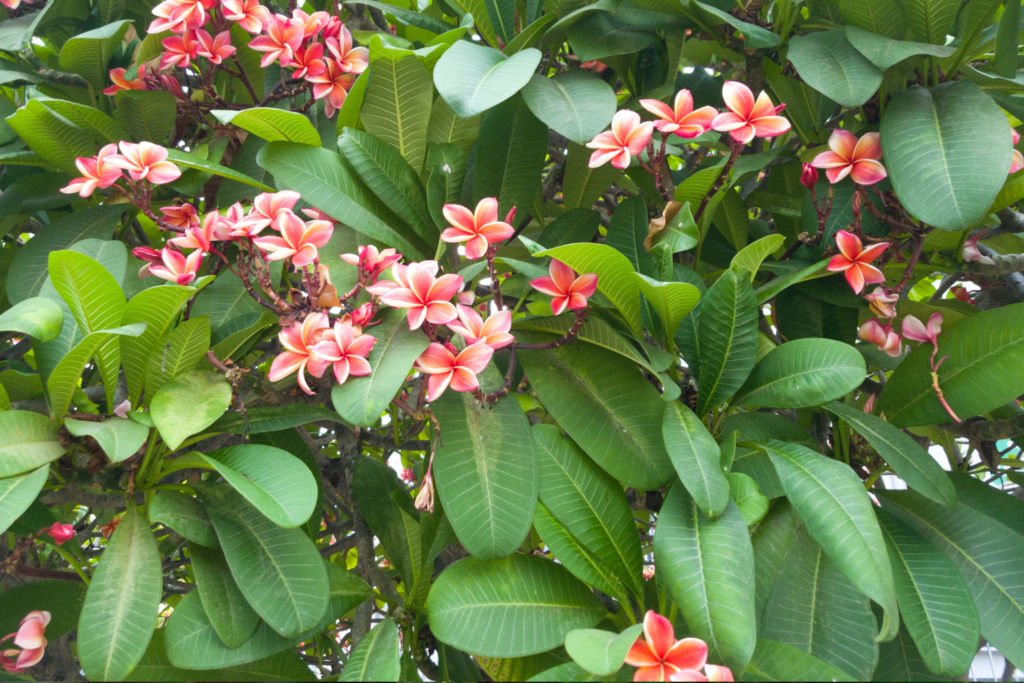
Plumerias tend to grow one main trunk, unless they are pruned or damaged. The site of the injury/cut is where the trunks, and/or stems, branch off over time.
To prune a Plumeria for a balanced shape, one only needs to lop off a segment or more, and to do so conservatively; Plumeria flowers for the next season/year are produced at the tips of the stems.
So, for those who want patio plants or pool side plants, or sunny porch plants, Plumeria is a good option. It likes pots and the pots can be moved wherever at least an average of 8 hours of sunshine is available per day. We definitely have available in West Central of Texas of both pots and sunshine!