
By Jackie Sledge
Big Country Master Gardener Association
I’ve spent quite a bit of time sitting in a rocking chair on the porch looking out at the backyard and making plans for a landscape redesign. I had two large beds around the oak trees for years, and I added five new beds to reduce the amount of grassy areas that had become overwhelming to me. All seven beds have been outlined with stone, and now it is time to fill them with plants! So far, I have made a list of plants already in the beds, a list of plants I have in wading pools waiting to be planted, a list of plants I want to include in the updated beds, a list of plants I’ve always wanted to try, and of course a list of my favorite plants. Trying to combine the lists has been a difficult, but exciting, task.
The first step of consolidating the lists is to make a plan considering color and how to incorporate it in the landscape.
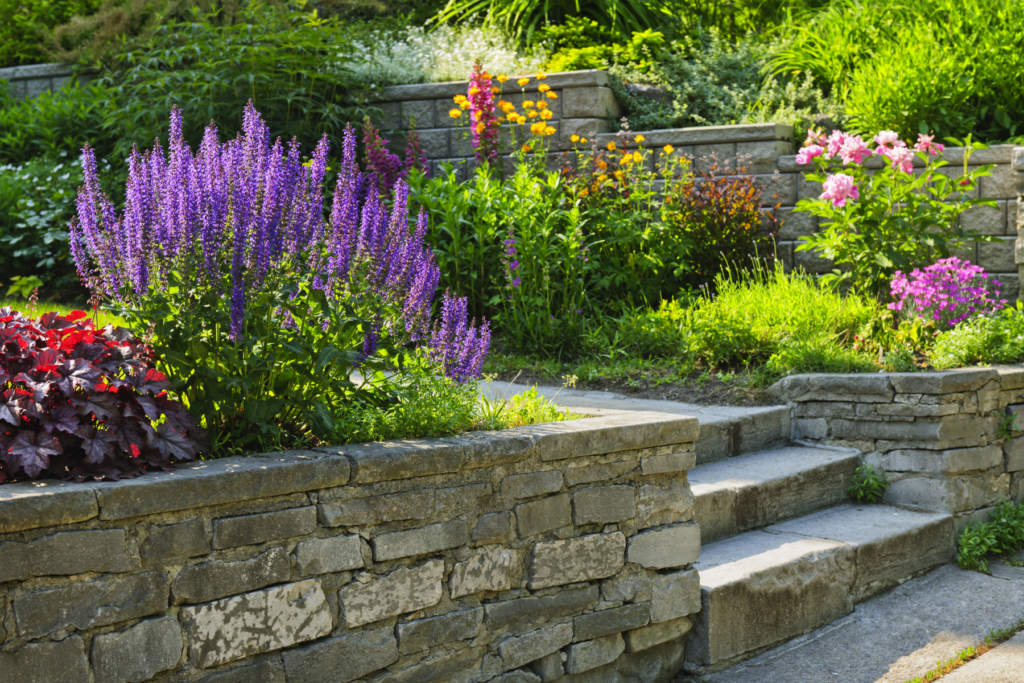
Choose plants with colors that will contrast with their backdrop and not fade into it. You want to see and enjoy the plants.
Consider shade when selecting plant colors because darker colors tend to get lost in shady areas. Plant light-colored flowers, or if you want to use darker colors, add plants with some light-colored flowers or light-colored foliage among the darker varieties.
Repeat theme colors to unify your garden. You can either use a border of the same plant in the same color around all beds or use different varieties of plants in the same color interspersed throughout the beds. Either planting method will unify all beds in your landscape.
Be sure there is a focal point in the garden. There may be a pool, fountain, or bench that is already the focal point. If there isn’t one, you can add a focal point by planting a mass of one color in the middle of a bed and surrounding it with contrasting colors.
Step 2 is to understand how color works when determining the color scheme for your landscape.
- Gray-foliaged plants can be used to separate flower colors or as contrast to green foliage. Examples of these plants are Artemesia and Dusty Miller.
- The different beds in the landscape can be compared to different rooms or areas in the house. Just as the color scheme can change from room to room inside, the landscape color scheme can change as you go through the gardens. The important thing is to remember to have compatible colors or a repeating color for a unified landscape.
- The color scheme can change from season to season. Examples are bright colors in the spring, cooler colors in the summer, and rich colors in the fall.
Warm colors advance which means they come forward. Yellow, orange, red, and hot pink appear to be closer because they show up better. Use them in beds in the back of the garden, beds that are not noticed, or in uninteresting areas. Warm colors make a garden feel smaller.
Cool colors recede which means they make small spaces appear larger. Purple, lavender, pastels, and green are used frequently in landscapes for calming, soothing effects.
White is in a category by itself. White gardens look clean and can be especially enjoyed in the evening. A word of caution is that when white is combined with other colors, it can leave spaces or holes in the landscape. When mixing colors in a garden, remember that white may or may not be useful in creating the bed you want.
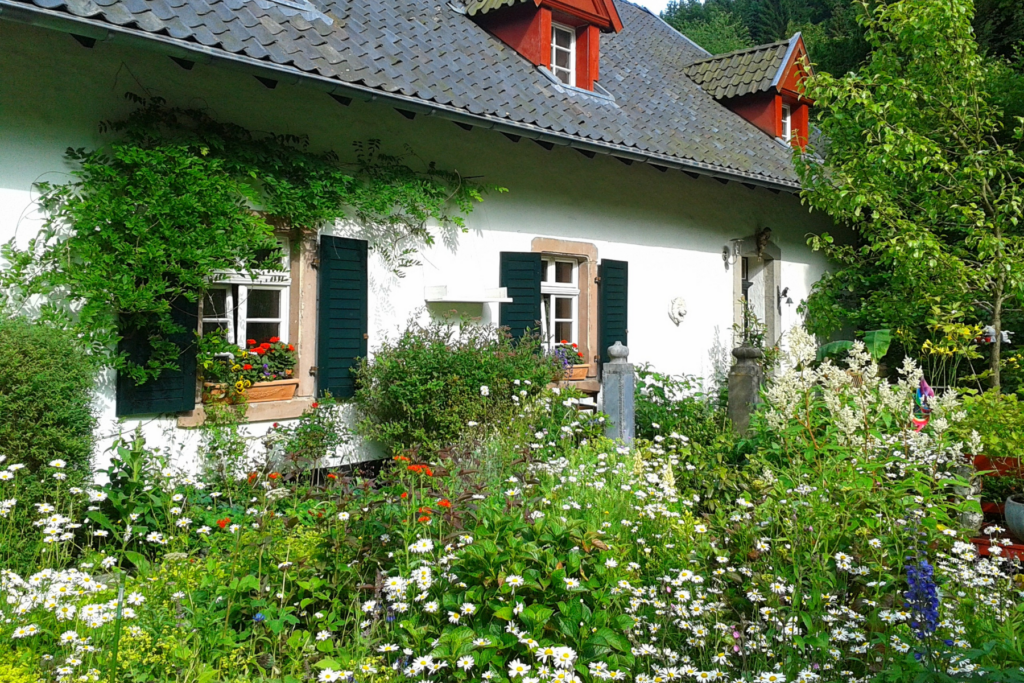
Step 3 is to plan for interest in all seasons.
- Use annuals to provide color and interest in the landscape throughout the year.
- Annuals can be purchased in 4”, 6”, quart, and gallon pots, and you can replant and give your gardens a totally different look in just a few hours.
- Perennials may bloom for shorter periods of time so include a variety of perennial plants for color all season.
- Plant some evergreen shrubs to provide interest in the winter when most perennials have died back to the ground.
Fragrance can be associated with the color of flowers, so be aware of scents when selecting plants.
- The most fragrant flowers tend to be white or very pale colors. Scientific studies show that flowering plants need to attract birds or insects to pollinate the blooms, and they are attracted to either bright colors or strong scents. If the flower doesn’t have a bright color, then it needs to have a strong scent to attract the pollinators.
- Thick-textured flowers often have wonderful scents. An example is the tuberose which is used as a floral note in perfumes.
- Some flowers release their aroma after the sun goes down. Plant night-scented stock, four-o’clocks, and flowering tobacco to enjoy their fragrances in the evening.
These are only guidelines for using color in the landscape – not hard and fast rules. The use of color is a personal preference or sometimes an experiment to see how you like a certain color or combinations of colors. Louise Beebe Wilder made an excellent point in Colour in My Garden in which she stated, “You should feel free to express yourself, and that means using one or more colors as you choose.” Even though the book was written in 1918, the idea is still applicable today.
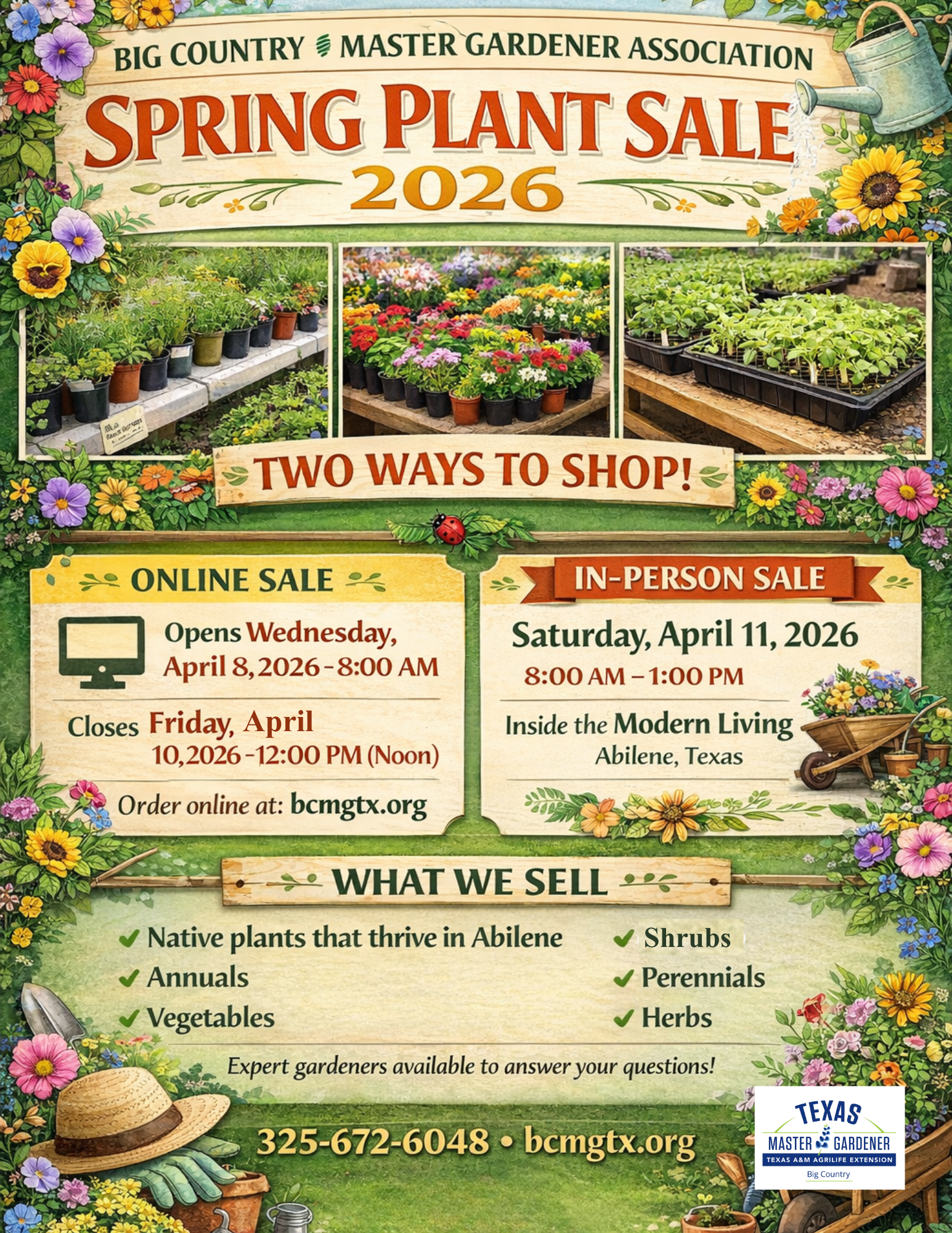
Back to my landscape redesign. Why am I working so hard on making a list of plants for my new gardens? The answer is because I want to be ready for the Master Gardener Spring Plant Sale next month. The online sale will begin at 8:00 a.m. on April 8th and will end at 12:00 noon on April 10th. The in-person sale will be held 8:00 a.m. through 1:00 p.m. on April 11th in the Modern Living Mall on the Expo Grounds. You’ll be hearing more about the Plant Sale in the next few weeks, but please go ahead and put these dates on your calendar and start making your plant wish list. You don’t want to miss this event!
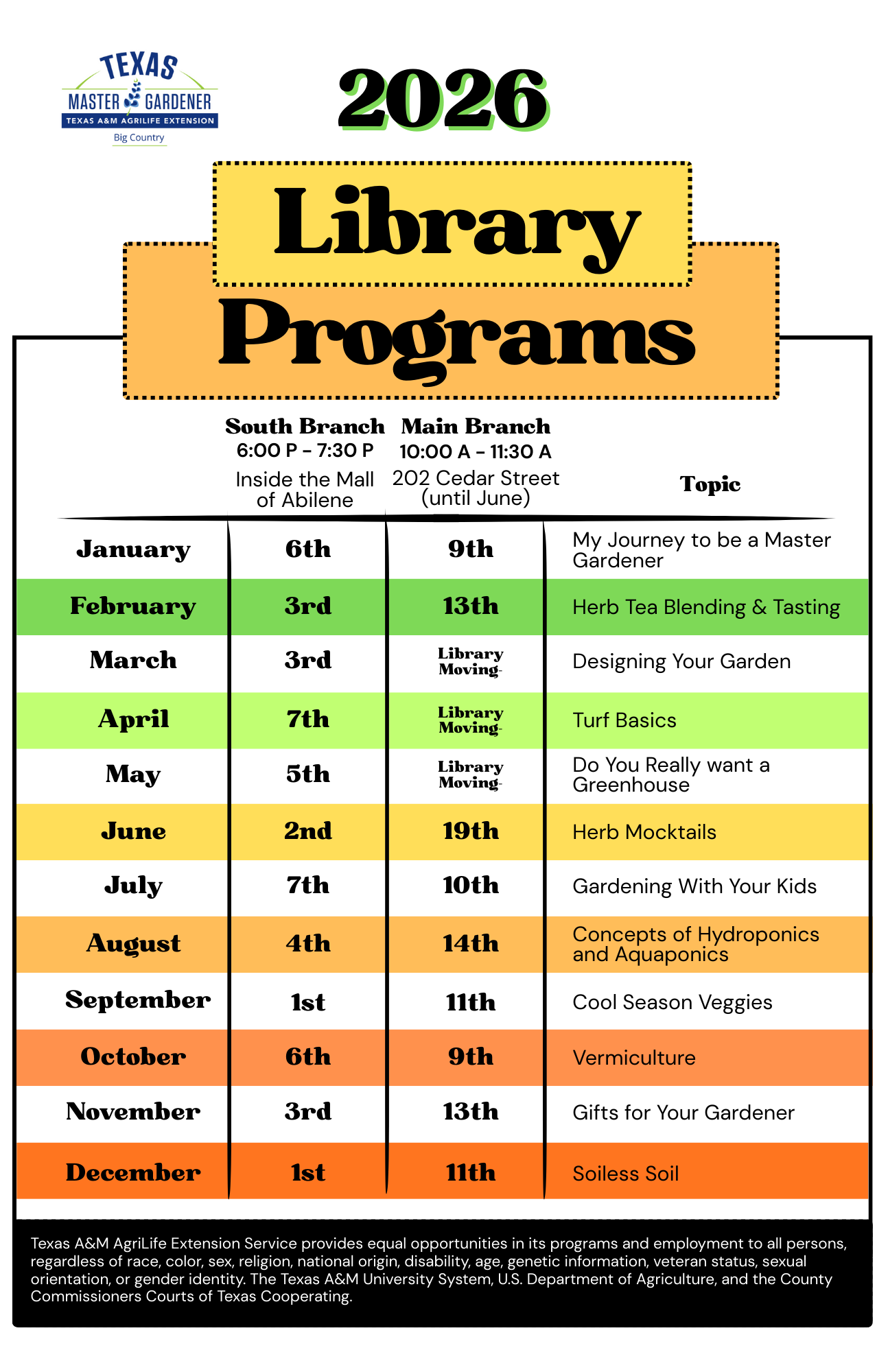
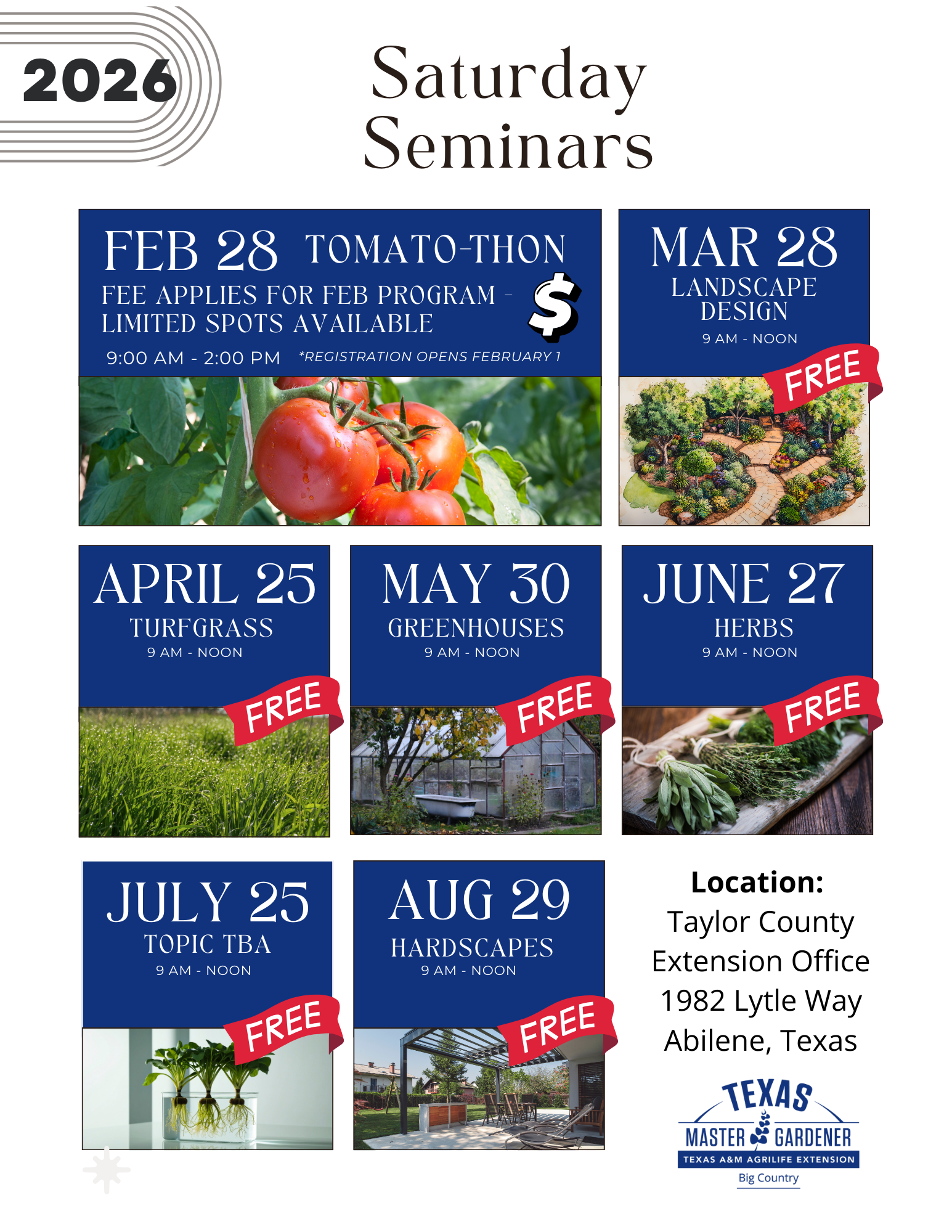
BCMGA offers several education programs each month. There is a program at 6:00 p.m. on the 1st Tuesday of the month at the South Library Branch in the Mall of Abilene, and the same program is offered again at 10:00 a.m. on the 2nd Friday of the month at the Downtown Library. The Downtown Library will be moving soon so be sure to watch for schedule changes during their transition to the new location. There is a Saturday Seminar on the last Saturday of the month at 9:00 a.m. at the Taylor County Extension Office Conference Room. Watch the BCMGA website and Facebook page for the topics and dates of these monthly programs.
If you have any questions, call the Taylor County Extension Office at 325-672-6048 or email us at bcmgardeners@yahoo.com. We hope you visit bcmgtx.org for information on all Big Country Master Gardener events, like us on BCMGA Facebook, and check out training presentations on BCMGA YouTube. We are here to help you.