
By Jackie Sledge
Big Country Master Gardener Association
We are well into October and days of wonderful weather for being outdoors and working in the yard. I’m always reminded that Neil Sperry says, “Enjoy what is probably the finest gardening weather of the entire year as you implement the changes you dreamed about all summer.” Those words encourage me to take advantage of the fall weather and get busy on that list of changes I want to make in my landscape.
Every year I check out the list of planting tasks that should be done in the fall to ensure success in the landscape.
- Plants that are planted in the fall establish good root systems, so they are ready for spring growth when the weather gets warm again. This is the perfect time to plant perennials.
- Trees and shrubs planted in the fall have time to recover after being transplanted from containers, so they also develop new roots before spring growth begins.
- Plant annuals to add color to the landscape. Some good ones for our area are pansies, snapdragons, plus ornamental cabbage and kale.
- Vegetable plants feel less stressed in the fall, and the produce tends to be higher quality and better tasting. Examples are beans, peppers, tomatoes, broccoli, cauliflower, lettuce, and spinach.
- Plant bulbs at the appropriate time depending on the variety.
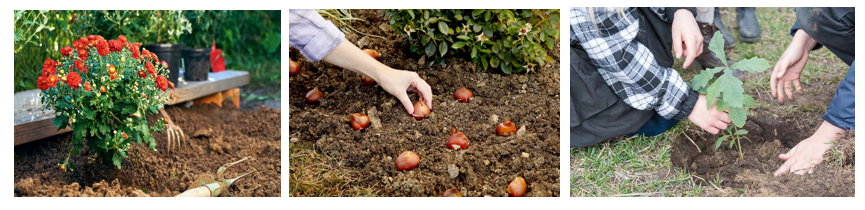
And now, here are miscellaneous tasks to do in the fall:
- Rainfall is sometimes more common during the fall months, and this lessens the need for using irrigation to water plants. If we have a dry fall, then plants, shrubs, and trees will need to be watered.
- Some perennial plants and shrubs may flower again when the temperature is cooler. What a nice surprise to be able to enjoy a new splash of colorful flowers!
- Prune damaged or dying plant parts. Be sure to leave old parts if the fruit or flowers will be on old wood next year. Also prune oak trees in the winter when it is cold or summer when it is hot to lessen the chances of disease.
- Pull up finished annuals so you can replace them with new ones to enjoy during the fall and winter.
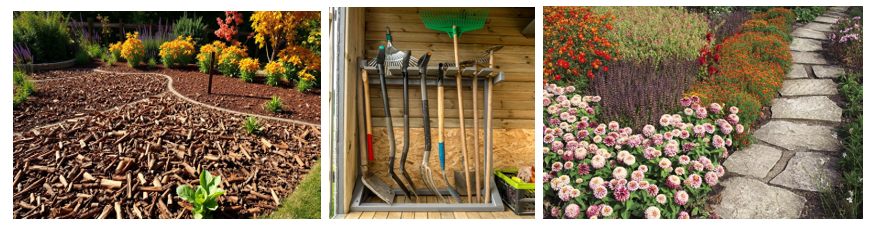
- Mulch. Mulch. Mulch. This improves the soil, suppresses weeds, and conserves moisture. Be sure to keep the mulch away from woody stems to prevent them from rotting. We always say to have “a donut, not a volcano” around a stem or tree trunk.
- Bring pots indoors to overwinter tender plants. Be sure to check for bugs and diseases before bringing them in.
- Watch the weather and harvest the last of the vegetables before a frost or freeze.
- Harvest fallen pecans regularly because nuts lose freshness and flavor the longer they are off the tree. Shell them immediately and store them in the freezer to maintain the best quality.
- Add new beds and walkways. It is much easier to do this work when it is cooler.
- Clean out the greenhouse or storage shed. Sweep the floor, wash pots, and scrub benches and tables to remove any pests that might hide over winter.
- Clean tools and store them properly to keep them in good condition.
- Be sure to update your landscape journal to show current plants and shrubs.
- Request seed catalogs when new editions are available. It is so much fun to see what’s available when planning your updated landscape.
Where to start:
- Look at the plans you made during the year and prioritize the changes you want to make. I added several new beds during the last couple of months, and now I need to plant shrubs and perennials as anchor plants and fall/winter annuals for color.
- Locate sources of materials and plants needed to complete the job. Hopefully you got to take advantage of the BCMGA Fall Plant Sale earlier this month.
- Can you do the work yourself, or do you need someone to do all or part of it? I am trying to be more realistic about what I can and can’t do myself, and I’m more willing to get help so the work gets completed. I’m following the recommendation to mulch, mulch, mulch, and right now I have 150 bags of mulch ready to put in my beds as soon as I finish planting. This task may require some assistance since I want to get the beds mulched as soon as they are planted, and it would take me quite a bit of time to spread that much mulch!
- Get started. For me, the first step seems to be the most difficult because I question the project, the plans, the cost, as well as the need for the change. When I’m able to see the end result with the cleaned up and replanted beds, that’s when I’m able to sit on the porch, drink a glass of tea, and smile while I appreciate the newly updated landscape.
BCMGA offers several education programs each month. There is a program at 6:00 p.m. on the 1st Tuesday of the month at the South Library Branch in the Mall of Abilene, and the same program is offered again at 10:00 a.m. on the 2nd Friday of the month at the Downtown Library. Watch the BCMGA website and Facebook page for the topics and the dates of these monthly programs.
If you have any questions, call the Taylor County Extension Office at 325-672-6048 or email us at mgardeners@yahoo.com. We hope you visit our website at bcmgtx.org for information on all Big Country Master Gardener events, like us on BCMGA Facebook, and check out training presentations on BCMGA YouTube. We are here to help you.
Until next week, Happy Gardening!