
By: Sarah Adams
Member of the Big Country Master Gardeners
Maybe every Fall is like this, but this September seems to be an epoch year for hummingbirds! I have always had hummingbird feeders and pollinating flowers, but this year I have seen as many as six hummingbirds in my backyard at one time! Further, the ones in my backyard are pretty laid back! I have a picture of 2 hummingbirds perched on the shepherd’s hook where my hummingbird feeders are hanging.
Hummingbirds are small, extraordinary birds. They are marvels of evolutionary engineering, powered by high metabolism, precision flight mechanics, and complex migratory behavior. Hummingbirds are in the Animal Kingdom, Phylum Chordata, Class Aves, Order Apodiformes, and Family Trochilidae. Hummingbirds represent one of the most specialized avian families on Earth. With over 330 species in the Americas, there are only around 18 species regularly found in the United States. Of those only approximately nine species regularly migrate through or reside seasonally in Texas. These include the Ruby-throated hummingbird, the black-chinned hummingbird, and the rufous hummingbird. Most likely I am seeing these hummingbirds just as their southbound migration is beginning. Most hummingbirds are gone by October; it is very rare that a hummingbird would overwinter in the Big Country.
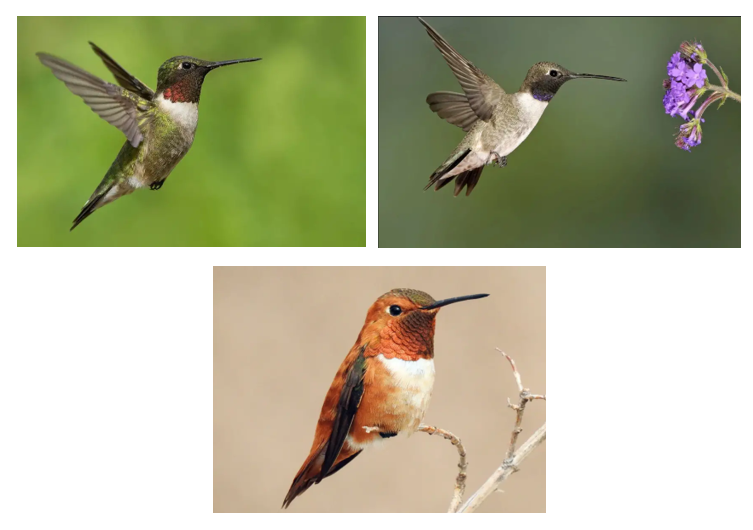
Amazingly, hummingbirds possess a ball-and-socket shoulder joint, allowing for 180° rotation of the wing. This unique feature enables true hovering, backward flight, and astonishing agility making them highly entertaining to watch! Hummingbirds have one of the highest metabolic rates of any vertebrate. At rest, their heart rate can exceed 500 beats per minute. During flight their wings beat up to 80 times per second, allowing them to hover in place or zip in any direction — even backwards! Hummingbirds rely on a high-sugar diet from flowers and feeders to maintain their very high metabolism. They also eat tiny insects for protein.
Contrary to the outdated “suction” theory, hummingbirds actually use capillary action and tongue flicking to draw nectar into their mouths, up to 13 times per second. Beyond feeders, you can support local and migrating hummingbirds by creating a diverse native plant garden. Hummingbirds are beautiful and hard-working pollinators. They are naturally drawn to tubular-shaped, brightly colored flowers. I have seen them flying around my Turk’s Cap and Bougainvilleas. They also feed on Salvia, Beardtongue, Coral Honeysuckle, Hummingbird Mint, and Trumpet Vine. To attract hummingbirds with flowers, Mike Arnold, Ph.D., professor and director of The Gardens, Bryan-College Station, suggests keeping the shape of blooms and how these birds feed in mind. Arnold suggests these tips for creating a hummingbird-friendly garden: choose tube-shaped flowers that match the way hummingbirds feed with their long, specialized beaks. Plant hummingbird-friendly plants like Firebush, Turk’s cap, Lantana, Petunia and Pride of Barbados. Stagger bloom times to ensure a continuous nectar supply from March through fall, ideally. Use feeders when there aren’t enough flowers in bloom to provide nectar. Having a diverse garden will also support small insects and arachnids like gnats, aphids, and spiders to provide protein for the hummingbirds.
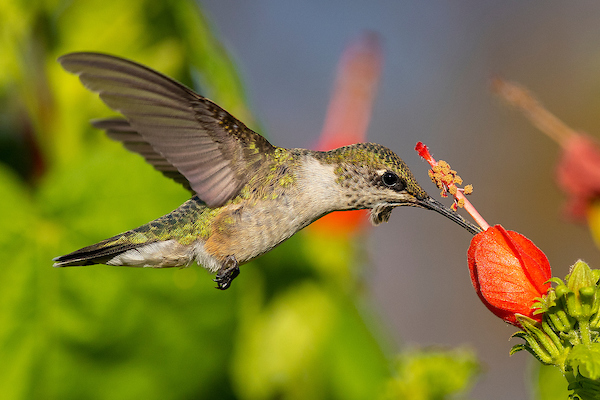
Additionally, providing water misters or drip fountains, small perching branches, and safe zones away from domestic cats can dramatically improve habitat quality. These little birds are fiercely independent and territorial, especially around feeders. Plus, they need to rest. Despite their reputation for nonstop movement, hummingbirds spend as much as 75–80% of their day perching, when they are not feeding or defending territory. Their high metabolism requires frequent short breaks to conserve energy. Perching allows them to digest nectar and survey their surroundings. Sometimes they perch to regulate body temperature either to cool down in the shade or to rest after burning energy in flight. A gardener looking to attract hummingbirds to their yard might place a metal or shaded pole to allow for a good resting spot that might be cooler than a branch in full sun. Gardeners will most likely see hummingbirds in the early mornings or late evenings when they are preparing for night.
Of course, always be mindful of using pesticides near a hummingbird habitat. They are small birds so pesticides can wreak havoc on their biological systems.
It is a little late in the year, but for future reference, I will add the Smithsonian’s National Zoo recommended Hummingbird Nectar recipe:
- Mix 1 part sugar with 4 parts water (for example, 1 cup of sugar with 4 cups of water) until the sugar is dissolved. (Avoid honey, brown sugar, or artificial sweeteners — all can be dangerous to hummingbirds.)
- Do not add red dye
- Fill your hummingbird feeders with the sugar water and place outside
- Extra sugar water can be stored in a refrigerator
- Change feeders every other day and thoroughly clean them each time to prevent harmful mold growth
Hummingbirds are not just backyard visitors; they are extraordinary examples of avian evolution and wildly entertaining. Gardeners in the Big Country can offer a seasonal haven for hummingbirds as they navigate thousands of miles during their migrations. By understanding hummingbirds, gardeners can turn their yards and gardens into safe, nourishing environments for these remarkable creatures.
If you have any questions, call the Taylor County Extension Office at 325-672-6048 or email us at mgardeners@yahoo.com. We hope you visit bcmgtx.org for information on all Big Country Master Gardener events, like us on BCMGA Facebook, and check out training presentations on BCMGA YouTube. We are here to help you.